ATM field service that restores machines, not just tickets.
For OEMs, managed-service providers and banks running multi-vendor ATM fleets. Faults raise their own tickets from the switch, AI agents chase the engineer, and every fix closes with proof the bank can open.
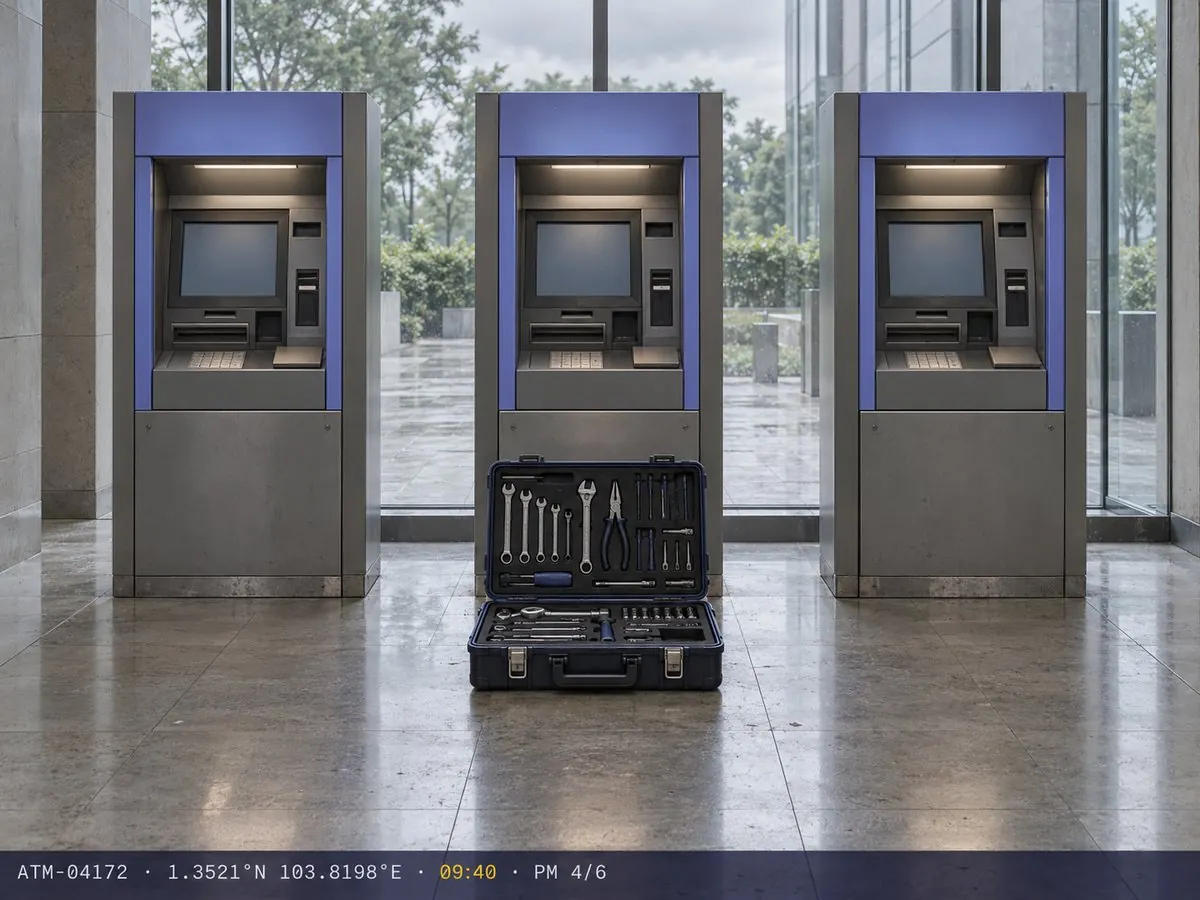
Most downtime is spent around the fix, not on it.
Noticing the fault, raising a ticket, finding an engineer who can attend, getting the right spare there and proving the machine works again. Fieldor takes the waiting out of each step.
WHAT BREAKS TODAY
- Alerts retyped into tickets by hand, hours late
- Engineers called three times for an ETA
- Spares issued with no link to the fault
- SLA penalties disputed with nothing to show
WHAT FIELDOR DOES
- Switch and monitoring feeds raise tickets automatically
- ETAs asked and escalated without a coordinator
- Spares scanned out against the ticket, RMA closed on return
- Every closure stamped with arrival, photos and time
The follow-up work runs itself, inside your rules.
Fieldor's agents do the chasing, logging and guiding that used to fill a coordinator's day. You decide which steps run automatically, which need approval, and who gets escalations.
Asks for the ETA, then chases it
Messages the assigned engineer on WhatsApp the moment a ticket is assigned. If the ETA goes quiet, it climbs the escalation ladder you set: retry, SMS, a voice call to the secondary custodian, then the zone head.
Drafts tomorrow's plan tonight
Weighs SLA, fault type, site importance, spares on hand and travel time to draft every engineer's day. Coordinators review it in minutes instead of building it for hours.
Guides the repair on site
Walks the engineer through the fix for that fault on that model, such as a dispenser pick-module swap, so first-time fixes don't depend on who happens to be nearest.
Logs vendor replies
Reads replies from vendors and partners and records them against the right ticket, so the trail stays complete without anyone copying emails across.
Every event becomes one clean incident
Device events from switch and monitoring feeds, QR reports and CRM calls land in one queue, de-duplicated and classified as FLM, SLM or any category you define.
Automation you can see
Every agent action is written to the ticket's audit trail. Turn steps on, off or to "ask first" per client, zone and fault.
From switch alert to verified fix.
A dispenser fatal on the switch feed becomes an incident with the device, site and SLA filled in.
Chosen by training on that model, spare in the van and distance, with site access hours respected.
ChasePilot asks on WhatsApp and escalates if there's no reply.
Geofenced check-in at the ATM; FixMate guides the swap; spare scanned out.
Stamped in-app photos and a test withdrawal; failed part tracked back for repair.
SLA by zone, vendor and model, every number traceable to a visit.
Every kind of ATM work on one record.
FLM and SLM calls
Break-fix by call category, with SLA clocks that follow your contract and escalation rules per client, zone and fault.
Preventive maintenance and campaigns
PM schedules per model and site, and campaigns that push one job to hundreds of machines at once.
Depot to van to machine, and back
Stock by depot, engineer and site; parts scanned out against the ticket; the failed part returns with the same ID for the repair centre.
Built for sunlight and gloves
Big type, one job per screen, required photos per checklist step, geofenced check-in. Android and iOS, in English, Hindi and Portuguese.
Wired to what you already run
ATM switch feeds over TCP/IP, multi-vendor monitoring agents, client CRM and ITSM by REST API and webhooks, SAP and ERP for spares and billing.
Evidence the bank can open
In-app photos stamped with site, coordinates and time and sealed on upload. Gallery uploads are refused; mock locations are detected.
From disputed SLAs to closed-with-evidence, in two quarters.
9,800 ATMs across three countries. Tickets used to be raised from monitoring screens by hand and closed on an engineer's word. Fieldor connected the switch feed, automated ETA chasing and made photo evidence mandatory at closure.
“We stopped arguing about whether a visit happened. Every SLA dispute last quarter closed with a photo and a timestamp.”HEAD OF FIELD SERVICES
Your data, where your bank needs it.
Run Fieldor in our cloud (India and EU regions), in your own private cloud, or on-premises inside your data centre, sized for 50,000+ sites. Role- and site-based access, SSO, an immutable audit trail and independent VAPT twice a year.
What ATM teams ask us.
Which ATM models and switches does Fieldor work with?
Fieldor is multi-vendor. Device status comes in from ATM switch feeds over TCP/IP and from multi-vendor monitoring agents, and each fault code is mapped to a ticket type. We map your switch and models during the first two weeks of a rollout.
Can we keep FLM and SLM separate?
Yes. FLM, SLM and any other call category you define each get their own SLA clocks, routing and escalation rules, per client and zone.
Do the AI agents act without asking us?
Only inside the rules you set. You choose which steps run automatically, which need approval, and who gets escalations. Every action is logged on the ticket.
How do you prove an engineer was really at the ATM?
Check-in fires on a geofence around the ATM, the device is bound to the engineer, mock locations are detected, and closure photos can only be taken in the app, stamped with site, coordinates and time.
We already have a legacy system. How do we move?
One zone at a time, side by side with the old system: discovery in weeks 0–2, a pilot zone in weeks 3–6 and zone-by-zone rollout in weeks 7–12, with a forward-deployed engineer on hand and a rollback path kept ready.